Table Of Content

The Green brothers attend an exhibit on Japanese architecture while moving to California, and the influence is evident throughout their work. In The Gamble House, Japanese-inspired cherry blossom tree and cloud motifs can be seen on the front doors, windows, lighting, and more. Additional elegant Greene and Greene creations (still privately owned) abound 2 blocks away along Arroyo Terrace, including nos. 368, 370, 400, 408, 424, and 440. For occasional opportunities to actually go inside the homes, there's the annual Craftsman Weekend in October, and Bungalow Heaven in April.
About the Greene and Greene Architects
Low-pitched roofs, deep terraces, and titanic, unscreened sleeping porches dominate the exterior of the house. The street view is especially striking for the monumentally deep eaves that shelter the northeast porch, which visually expands the boundaries and overall form of the house well beyond the confines of its shingled walls. In the early years of the twentieth century, sleeping porches were popular and national periodicals promoted them to health seekers and the culturally alert, many of whom came to Pasadena for the winter season. Nowhere did these porches proclaim more boldly the promise of outdoor life than in the Gambles’ winter residence. Using Douglas fir posts and beams, redwood split shakes, local river stones, clinker brinks, and a creeping fig vine that literally and figuratively roots the house to its site, the Greenes skillfully choreographed a seamless integration of house and landscape.
AD Classics: Gamble House / Greene & Greene
Gamble House Launches Open-Air 'Gardens & Gambles' Tour - Pasadena Now
Gamble House Launches Open-Air 'Gardens & Gambles' Tour.
Posted: Fri, 18 Sep 2020 13:43:47 GMT [source]
The home stayed in the Gamble family until 1966, when it was deeded to the city of Pasadena in a joint agreement with the USC School of Architecture. Today the home is a museum, with two 5th-year USC architecture students living in the house year-round. Similar to the rest of the residences on the tours, a connection to the outdoors is inseparable from the history of the house and to this day, the restoration team is keeping the intention alive.
Gamble House Tours

The Gamble House is one of the finest surviving examples Greene and Greene designs because it is so intact. Frank Lloyd Wright coined the term “organic architecture,” which was used to describe his designs which feature indoor-outdoor connections, low-pitched rooflines, horizontal orientations, banks of windows, and extended rafters. The Greene brothers employ many of these same elements in The Gamble House design. The home also features a double-story front porch design, capitalizing on the beautiful surrounding landscape. The Greene brothers received little acclaim for their work during their active years. It wasn’t until 1948 (over two decades since they closed their architecture firm) that they received recognition from the Pasadena Chapter of the American Institute of Architects.
Iconic Perspectives: Greene & Greene's Gamble House
Not only did the Greene brothers design the house, but they also designed the furniture, within to create a cohesive feel. It all began when David and Mary Gamble of the Proctor and Gamble family packed up their belongings and moved from Ohio to sunny California in 1893. At the time, many families from booming cities in the Midwest and on the East Coast were migrating to California in the hopes of a cleaner, warmer, healthier lifestyle. Many of them settled in Southern California and a large group set up camp in Pasadena. Enjoy a guided walk around the historic Arroyo Terrace neighborhood, a National Register historic district that’s home to nine Greene & Greene houses as well as the works of other noted architects such as Myron Hunt, Edwin Bergstrom, Elmer Grey, and D. Among these are the personal residences of Myron Hunt and of Charles Greene, whose house evolved between 1902 and 1915 as his family grew and his design ideas matured.
David B. and Mary H. Gamble Professorship
The icebox/refrigerator in the cold room was too small in scale for a house of that size. The stove in the stove room had been acquired from another Greene and Greene house. But it was a 1920’s stove, which was not the correct period for the Gamble House. The Gamble house incorporates Craftsman design in combination with deep Japanese influence.
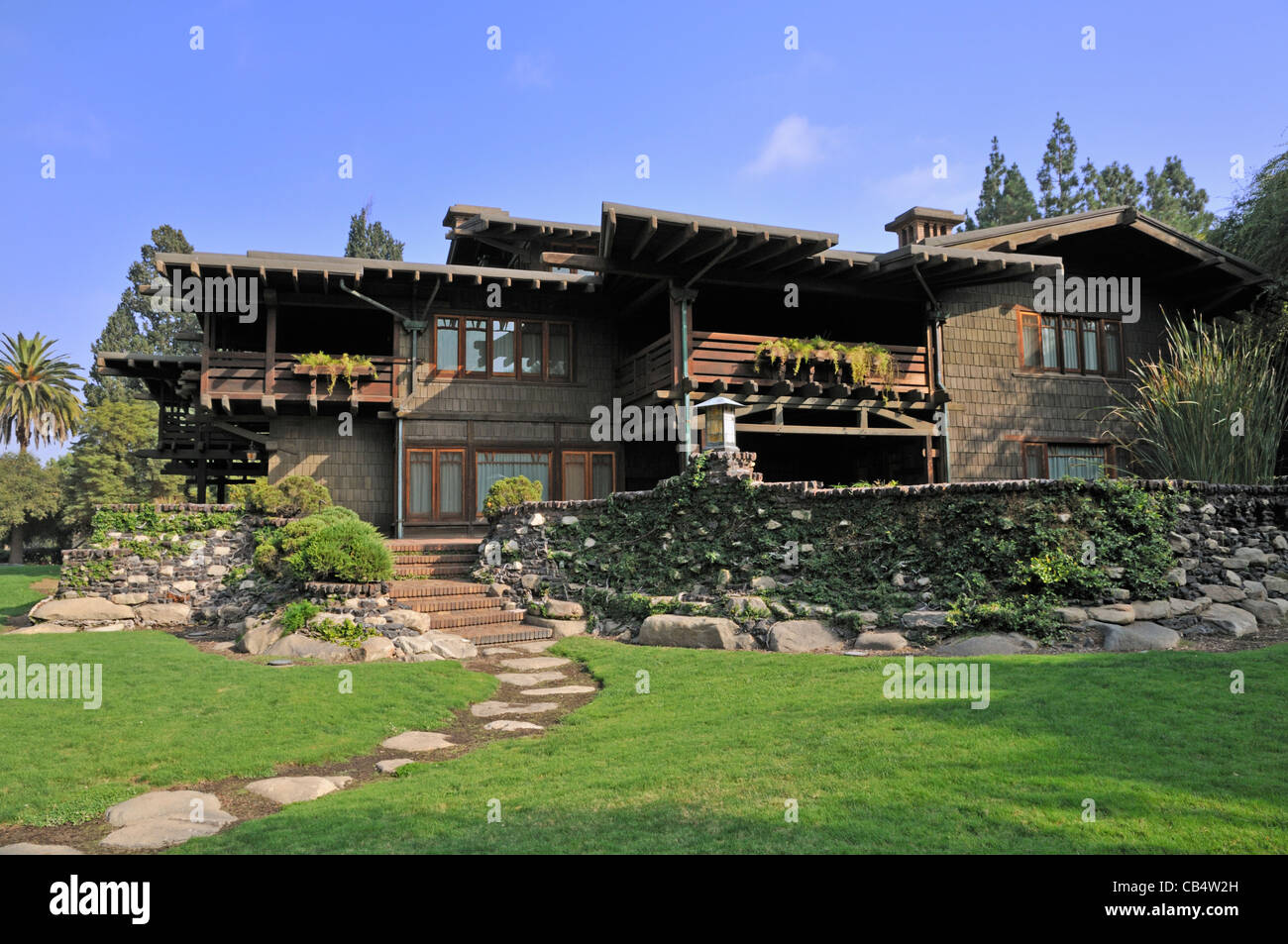
It is one of America’s most stunning house museums, and is a treasure to all who experience it’s beauty. The Craftsman style uses a nature-inspired color palette featuring browns, olive greens, and rust oranges. Allowing the structure to blend in with the surroundings helps establish a sense of unity with the landscape and a relaxed feel. After completion of the house, the Gambles invited Mary’s younger sister, Julia, to live with them. Julia continued to live at the house until her death in 1944, when one of David and Mary’s children, Cecil, and his wife, Louise, moved in. But, if I’m totally honest, I’m really not the biggest fan of the American Craftsman Movement of the late 19th and early 20th century.
Worldwide Church of God Historical Site
Gamble House tours (one-hour tours, specialty and group) are offered on Tuesdays, and Thursdays through Sundays. Please click HERE for photography and film reservations (fees apply) and policies. The third floor was planned as a billiard room but was used as an attic by the Gamble family.
The mission of The Gamble House is to inspire the public’s appreciation and understanding of architecture as a fine art through the example of The Gamble House, the most complete and best-preserved work of American Arts and Crafts architects Charles and Henry Greene. The prominent amount of lush outdoor space and sleeping porches on the property exhibit an appreciation that the Greenes had for nature. To accommodate a eucalyptus tree that existed on the land before the house was built, the Greenes created notches in the roof line where it could stand. The house’s art glass—shown here on the front door—acted as a way to bring light into the space before there was electricity. Inspired by Japanese architecture, the Greenes ensured that there were no hard edges to be found on the property. The exterior of the house is lined with Douglas fir and the extended overhanging eaves act as cooling agents while protecting the porch from the rain.
While the home was constructed in the Craftsman style decades prior, the elements of indoor-outdoor connections, horizontal lines, and earthy color palette resonated with the era. “Architecture as a Fine Art,” was Charles Greene’s mantra (he wrote an article of this title in 1917), and his vision of marrying exquisite craft with beautiful and useful designs became central to the Greenes’ reputation, for better or worse. In the Gamble House, the two brothers could explore the full possibilities of this vision for clients who appreciated and could afford it. That their work was no longer in demand by 1915 is as much due to changing fashions (including the rise of interior decorators), as it was to the wartime economy and the high cost of materials and labor. Charles moved with his family to Carmel-by-the-Sea in 1916, where he continued some design work, though at a slower pace. Henry nominally carried on the joint practice in Pasadena until 1922, when it was formally dissolved.
Perhaps meeting the architects at the construction site, and certainly impressed with the other Greene & Greene houses in the Park Place neighborhood, the Gambles met with the brothers and agreed on a commission. It has patterned brick paving with planting areas, a large curvilinear pond, and garden walls made with distinctive clinker bricks and boulders. Paths made with large water-worn stones from the nearby Arroyo Seco are reminiscent of running brooks crossing the lawns. The overall landscape design and constructed garden elements are integrated with the architectural proportion and detailing.
To protect the exposed structure, they started to apply a preservative, which ended up oxidizing and turned the exterior green and some of the wood black. When a team revisited the project to try and achieve its original colors, they removed the old preservative and replaced the original screens with ones made of copper. They also had to manually remove a toxic epoxy that had filled the wood in the past.
Although the house is not as spatially adventurous as the contemporary works of Frank Lloyd Wright, or even of the earlier New England "Shingle style," its mood is casual and its symmetries tend to be localized. The Greenes used an experienced team of local contractors who had worked together for them in Pasadena on several previous homes, including the Hall brothers, Peter and John, who were responsible for the high quality of the woodworking in the house and its furniture. The Gamble family crest, a crane and trailing rose, was integrated in part or whole in many locations around the house. The Gamble House in Pasadena, California, is an outstanding example of American Arts and Crafts style architecture.
Thankfully Cecil and Louise were fully aware of their home’s architectural significance and in 1966 they gave the house to the city of Pasadena, but with a joint agreement with USC’s School of Architecture, which is the state in which the house remains today. As a unique part of the USC co-ownership, select students of the School of Architecture may have the honor of staying in the servants’ quarters for one year. It was commissioned by David and Mary Gamble, of Cincinnati, Ohio, as a winter residence. Teak, maple, oak, Port Orford cedar, and mahogany surfaces are placed in sequences to bring out contrasts of color, tone, and grain. Inlay in the custom furniture designed by the architects coordinates with the inlay in the tiled fireplace surrounds, and the expressed, interlocking joinery on the main staircase was left exposed.


No comments:
Post a Comment