Table Of Content
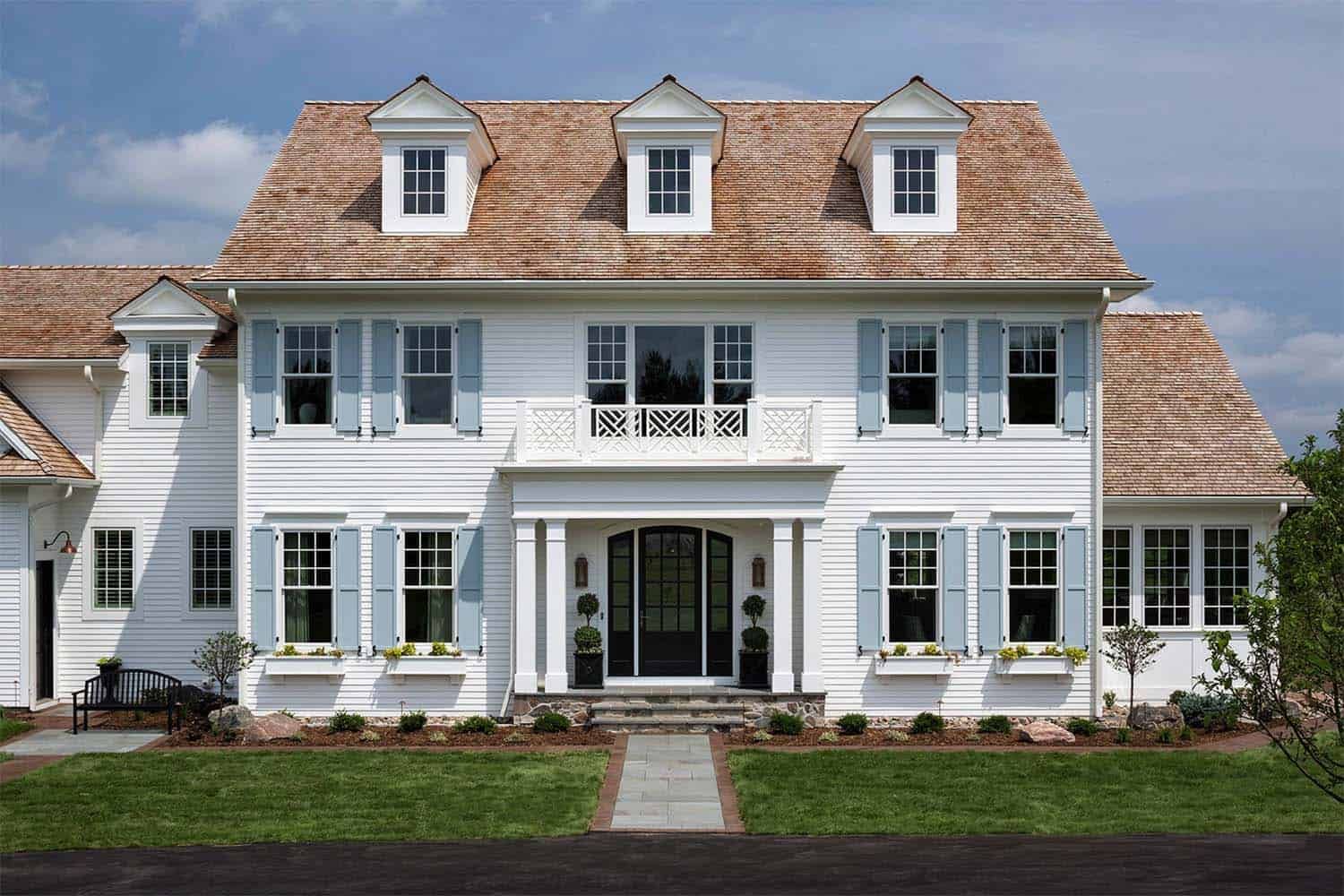
Tract home design in Southern California and Florida largely descends from the early movement. The iconic terracotta shingles and stucco walls have been standard design of new construction in these regions from the 1970s to present. Additional rooms include a summer kitchen, library, an office, a 1,755-square-foot basement, and a picturesque gallery overlooking the courtyard.
Do colonial houses have basements?

The early French Colonial house type of the Mississippi River Valley region was the poteaux-en-terre, constructed of heavy upright cedar logs set vertically into the ground. These basic houses featured double-pitched hipped roofs and were surrounded by porches (galleries) to handle the hot summer climate. A colonial home is such a timeless structure, so why not honor its beauty with some classic tones?
Capture the Warmth of Early American Architecture With a Colonial Kitchen - Better Homes & Gardens
Capture the Warmth of Early American Architecture With a Colonial Kitchen.
Posted: Tue, 19 Sep 2023 07:00:00 GMT [source]
Steep Roofs
Also, Colonial houses were often built with steeply pitched roofs that enabled practical drainage and access to an attic space. Dormer windows eventually became popular as a way to provide light and ventilation for the upper level, adding to the home's usable living space. French Colonial style houses, found in the South East, in particular Louisiana, exude elegance with their steeply pitched roofs and wraparound porches, verandas and balconies, as shown on the house above. Architectural features were designed to cope with the warm climate so verandas were built because they are perfect for alfresco living, while small dormers in the roofs and tall thin windows prevent too much heat entering the house. There are many types of colonial house styles stemming from British Colonial (most common in the US), Dutch colonial, French colonial and Spanish Colonial. Within the US, different colonial styles of homes were built in different regions including saltbox, cape cod, Georgian and southern colonial houses.
Georgian
It is best exemplified in the California Quadrangle, built as the grand entrance to that Exposition. In the early 1920s, architect Lilian Jeannette Rice designed the style in the development of the town of Rancho Santa Fe in San Diego County. According to Holliday, Weber bought a commanding lot high on a hill in Bel Air, overlooking the Bel Air Country Club. For the main house, she hired architect James E. Dolena to design a blindingly white 30,000-square-foot neoclassical mansion, the likes of which LA had never seen.
Colonial homes have consistently been popular for various reasons, including historical context, architectural allure, practicality, and versatility. As one of the earliest architectural styles in the United States, these homes represent a crucial period in American history, embodying the nation's architectural and cultural heritage. In addition, they provide a tangible link to the past, offering insights into the lifestyles and values of early settlers. When Europeans colonized America, they brought their architectural styles with them.
Many of these were designed by architectural partners Ida Annah Ryan and Isabel Roberts. Another significant example of the emerging popularity of Spanish Colonial Revival can be seen in the architecture of south Florida's Coral Gables, a planned city established in the 1920s that prominently incorporates the style. This 1820's colonial revival sits on a historic horse farm, according to the former Re/max listing. The house offers a classically charming red brick exterior with dark gray shutters, a stunning canopy framing the door, and expansive landscaping. Merrywood was built in Tryon, North Carolina, in 1904 as a boy's boarding school by Dr. Benno Von Kahlden, notes Re/max, and now sits as an elegant but down-to-earth house.
Georgian Style
A great example of Southern Colonial style homes is the estate homes in the South with colonnades extending across the front of the house. These large two- to three-story homes were set far off from the main road, accessed via a long drive, and featured a portico or front patio behind the colonnade. The New England colonial built by British immigrants along the east coast was rectangular and traditionally built out of wood. It had a large and central stone chimney, a steep and side-gabled roof, and was two stories tall.

French Colonial home
Colonists began building houses they had seen in western England with materials gathered at the Blackstone River in northern Rhode Island. This style of house became known as the Stone Ender, as only one end of the house was constructed of stone—a stone extension of a massive chimney. When Germans traveled to North America, they settled in New York, Pennsylvania, Ohio, and Maryland. Stone was plentiful, and the German colonists constructed sturdy homes with thick walls, exposed timbering, and hand-hewn beams. The 1753 Jacob Keim farmstead in Oley, Pennsylvania, is typical of this vernacular colonial style.
Old Hollywood Glam Alert: Wallace Neff-Designed Spanish Colonial in Pasadena Hits the Market for $10.8M
Called the “White House” by those aware of Hearst’s political ambitions, it is today the site of the Annenberg Community Beach House, which has columns in honor of the long-gone mansion. They overlooked the authoritarianism implicit in the style in their desire for civic monumentality. Built in 1710, this colonial home in Lower Gwynedd, Pennsylvania, has a deeply historical feel with tan stone walls, a classic symmetrical feel, dormers, and stone chimneys. It's set back in a clearing of trees, giving it a charming, fantastical appearance. Designed by Lois Lily Howe, one of the first female architects of the early 20th century, this colonial revival in Cambridge, Massachusetts, charms with blue siding and white trim and accents.
Over centuries, the Colonial house was adapted and reinvented around new materials, technologies, and building techniques. By the late 1800s, it had organically evolved into a style called “Colonial Revival” that has yet to fall out of fashion. For more opulent homes, the 17th-century French-style toile wallpaper ruled the day. The paper featured pastoral scenes in its pattern with trees, flowers, animals, and cottages. Another distinguishing feature of Colonial homes is the central fireplace in the middle of the structure. Alternatively, there may be two fireplaces with one on each side of the house.
Historically, this simple layout made the homes easier to heat in the winter, a practical necessity for early colonists. In addition, separate rooms, as opposed to open-concept layouts, and relatively low ceilings helped retain warmth more efficiently. According to Christina Dikas, US Colonial Revival or American Colonial Revival style homes became popular in the mid-19th and 20th centuries. 'Colonial Revival style became popular after the centennial celebrations of 1876, at which time Americans kindled an interest in colonial period architectural traditions,' she says.
At the time, the property consisted of 100 acres which included two islands. In 1983 William and Mary Ann Dykes purchased the home and started restoring it to its 18th Century glory. Colonial architecture in the United States is most commonly found on the eastern seaboard, which is was where the bulk of the population lived when colonial architecture reigned supreme (1700 to 1800).
Oftentimes, German Colonials will feature arches above the windows and doors on the first floor. As a result of the infrastructure and materials available during their namesake era, traditional American Colonial homes are fairly simple. Similar to the homes colonists lived in back in England, they’re rectangular, typically two stories, and fairly symmetrical.


No comments:
Post a Comment